

LED Displays for Production & News Sets
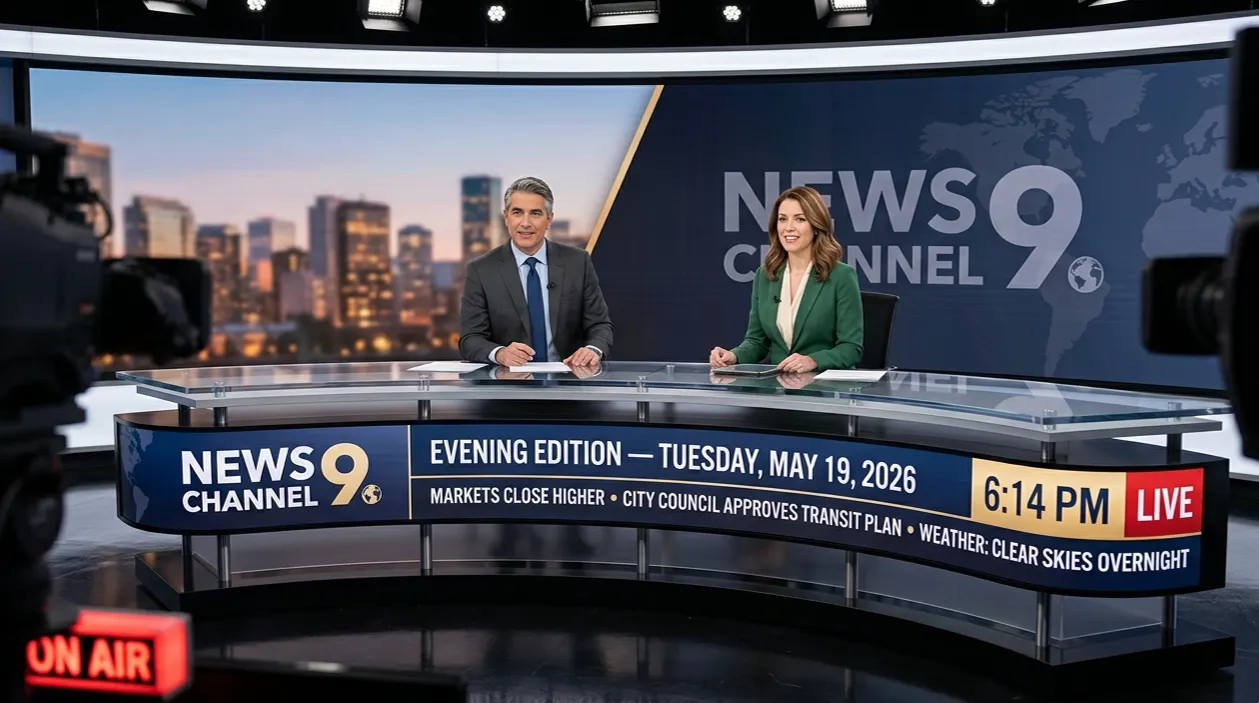
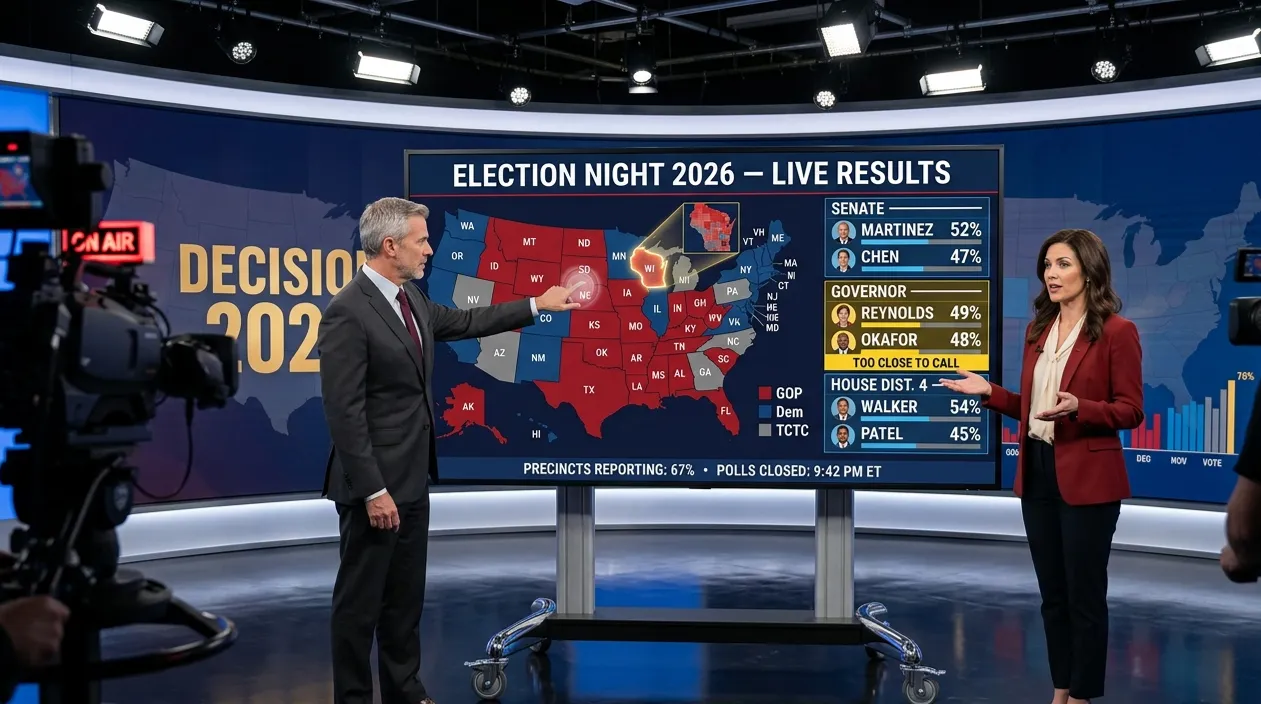
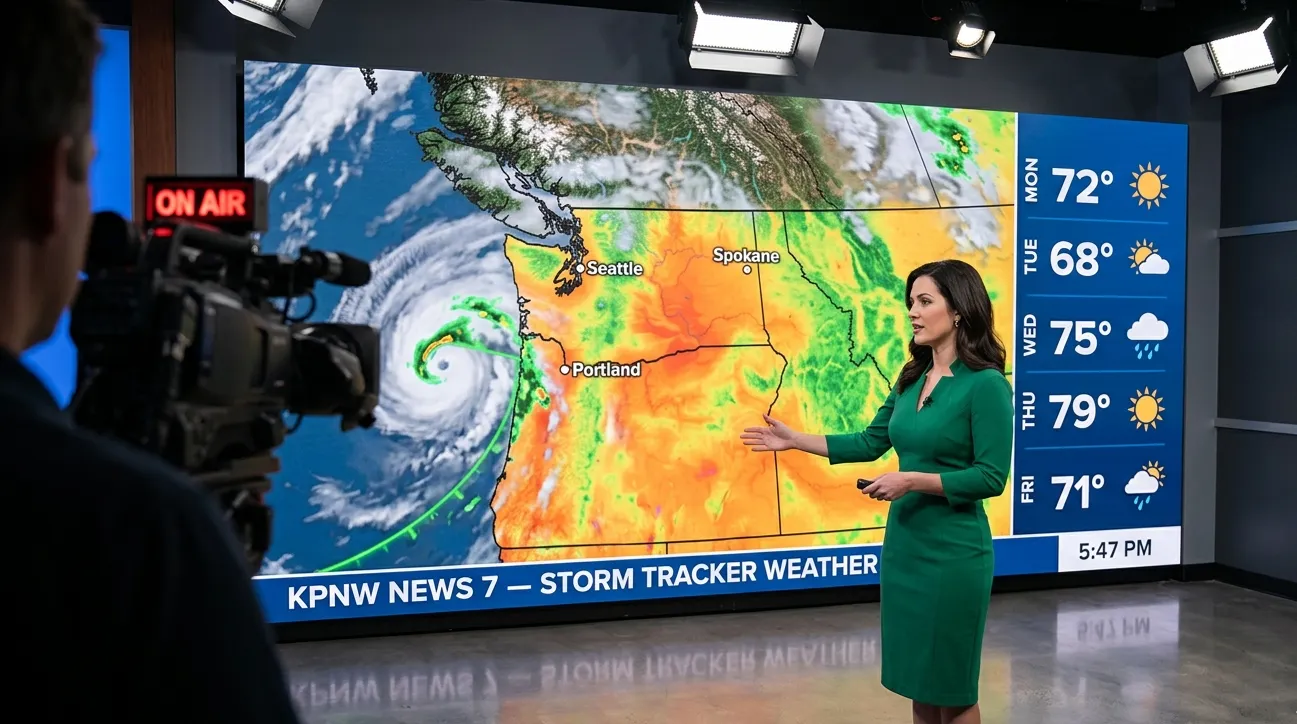
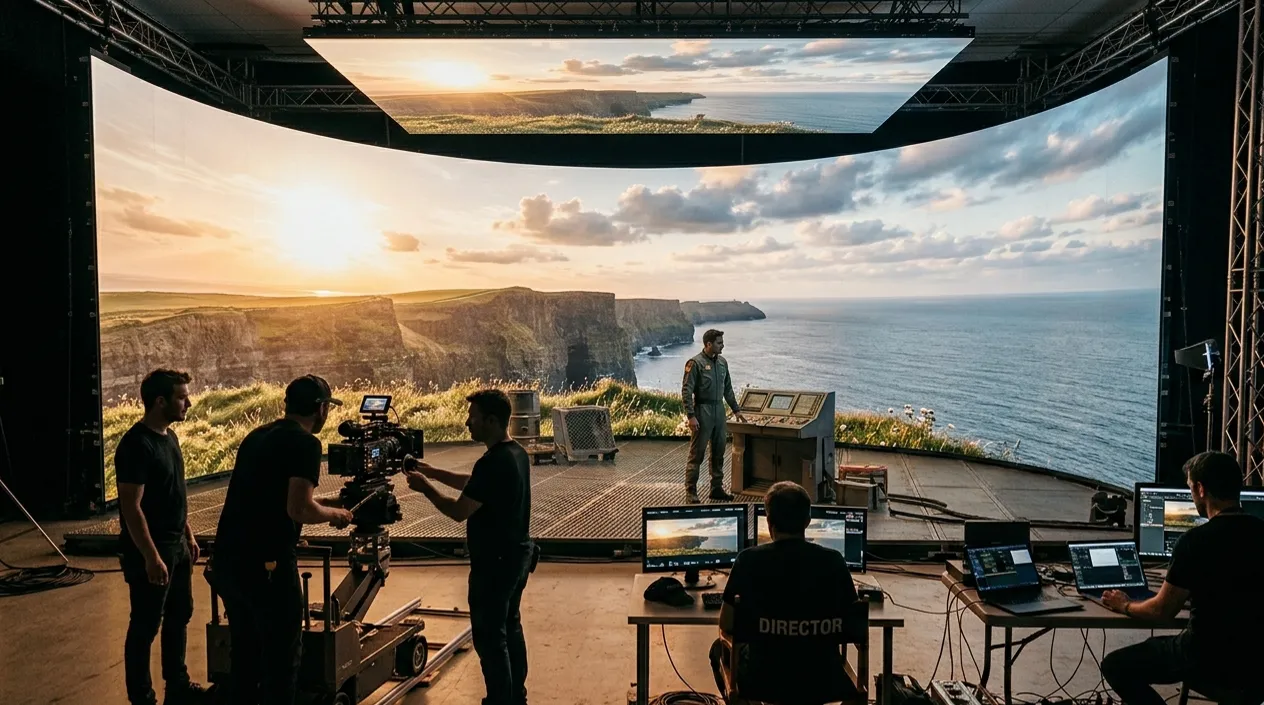
- Broadcast-Grade Visual Performance: Fine pixel pitch and flicker-free refresh rates optimized for studio cameras and live feeds.
- Seamless exceptional DCI-P3 Color Accuracy: True-to-life color calibration across the full display surface, ideal for chroma keying and post-production
- Low Heat & Silent Operation: Fan-less designs with efficient thermal management for quiet studio environments
- Flexible Mounting & Custom Sizing: Designed for integration into curved, flat, or creative set elements with precision alignment
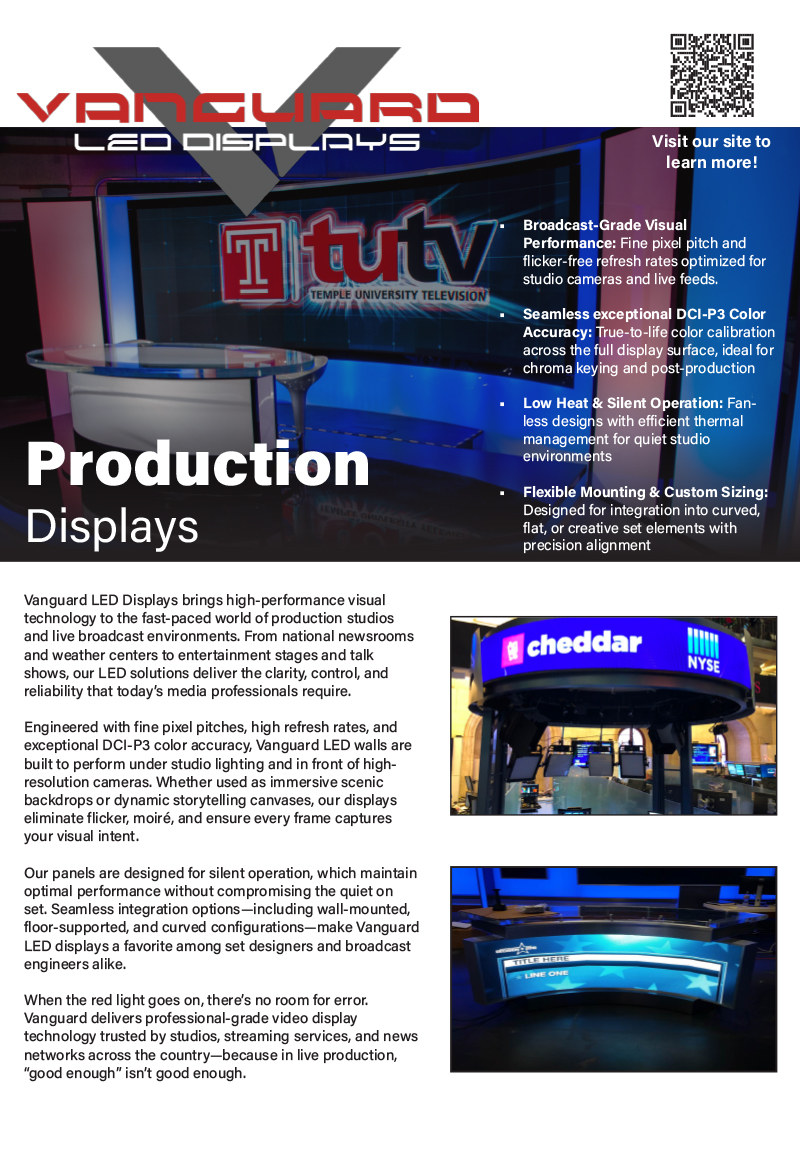
Vanguard LED Displays brings high-performance visual technology to the fast-paced world of production studios and live broadcast environments. From national newsrooms and weather centers to entertainment stages and talk shows, our LED solutions deliver the clarity, control, and reliability that today’s media professionals require.
Engineered with fine pixel pitches, high refresh rates, and exceptional DCI-P3 color accuracy, Vanguard LED walls are built to perform under studio lighting and in front of high-resolution cameras. Whether used as immersive scenic backdrops or dynamic storytelling canvases, our displays eliminate flicker, moiré, and ensure every frame captures your visual intent.
Our panels are designed for silent operation, which maintain optimal performance without compromising the quiet on set. Seamless integration options—including wall-mounted, floor-supported, and curved configurations—make Vanguard LED displays a favorite among set designers and broadcast engineers alike.
When the red light goes on, there’s no room for error. Vanguard delivers professional-grade video display technology trusted by studios, streaming services, and news networks across the country—because in live production, “good enough” isn’t good enough.
Resources of the Production & News Sets
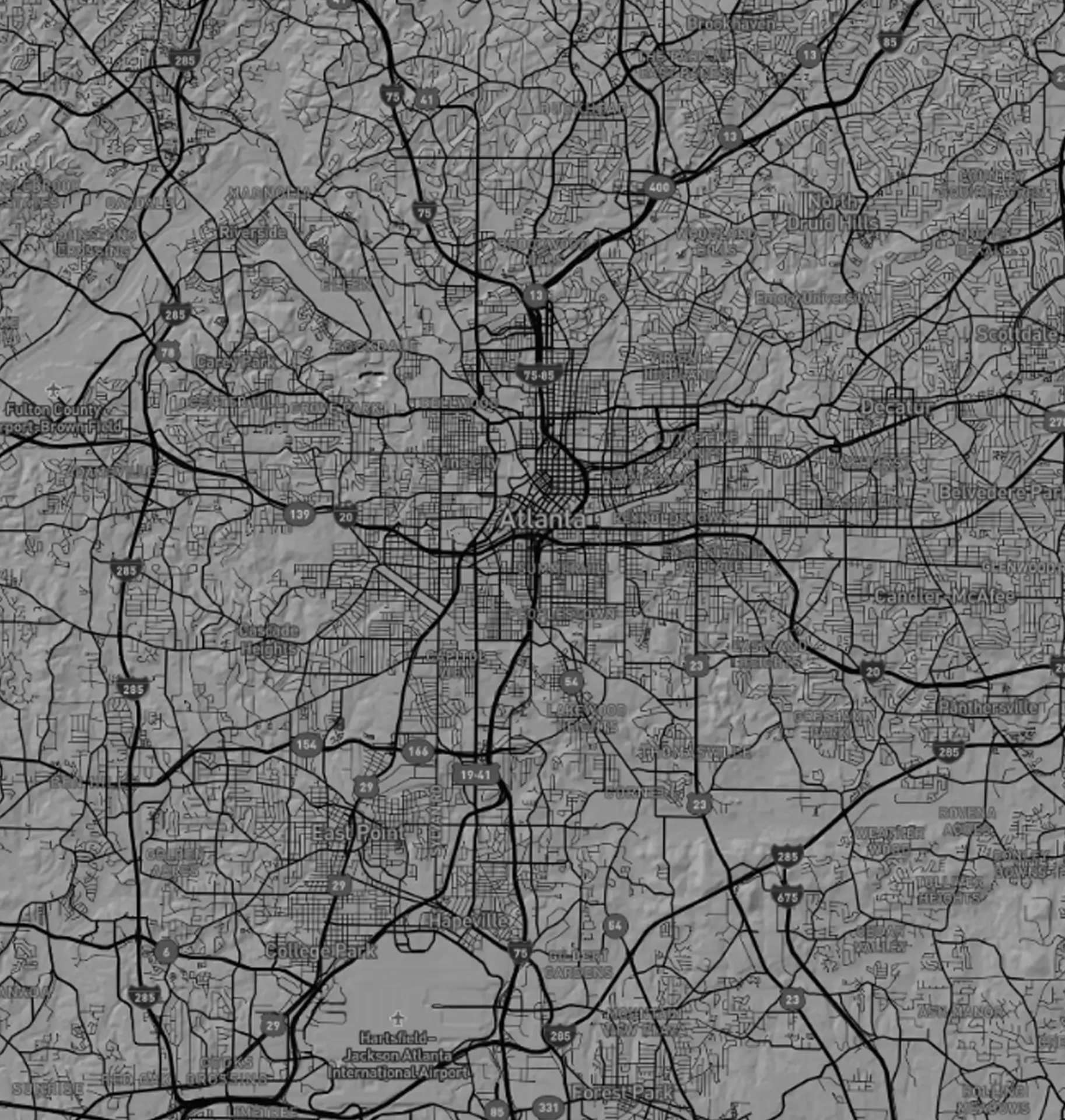
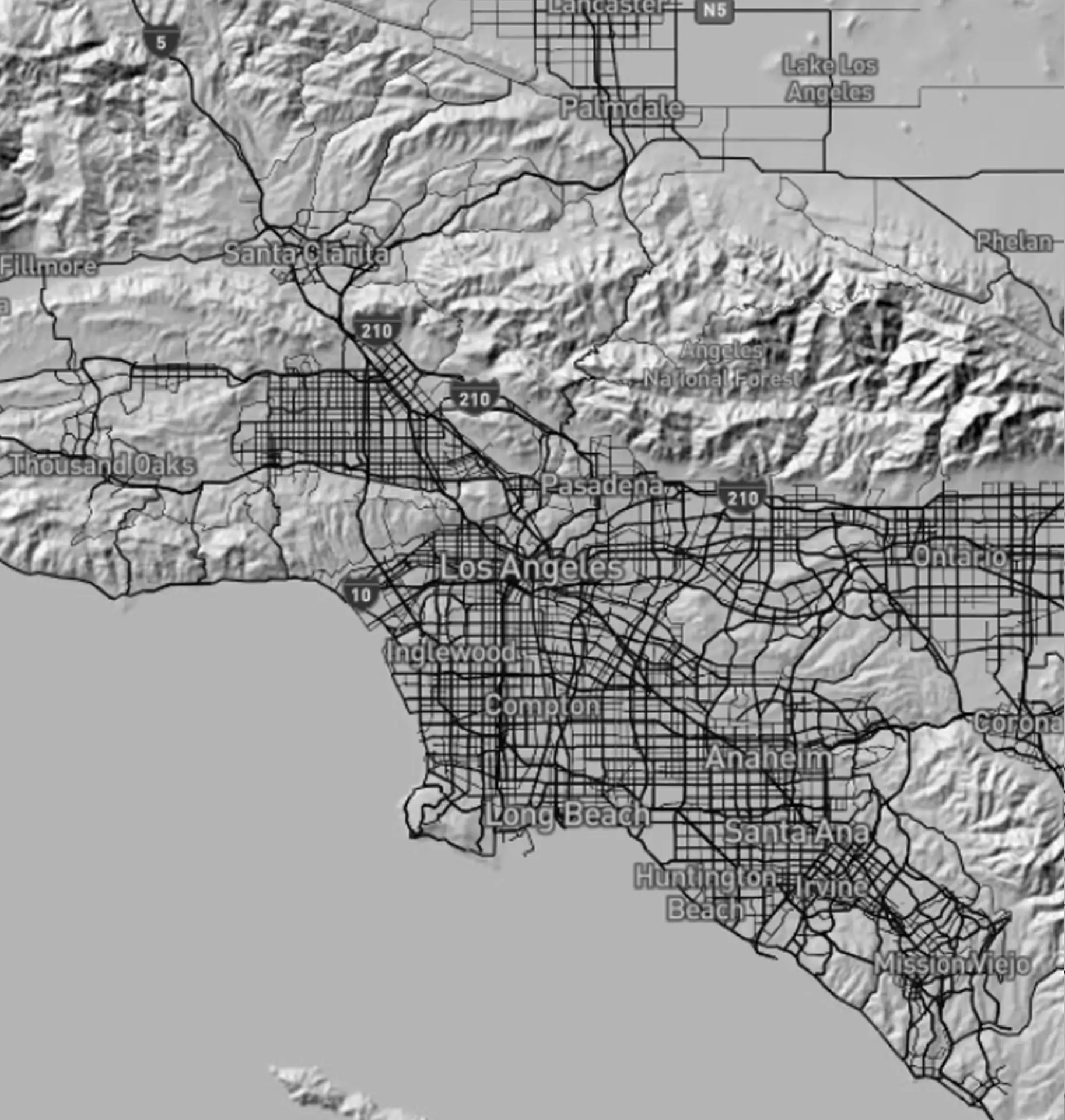
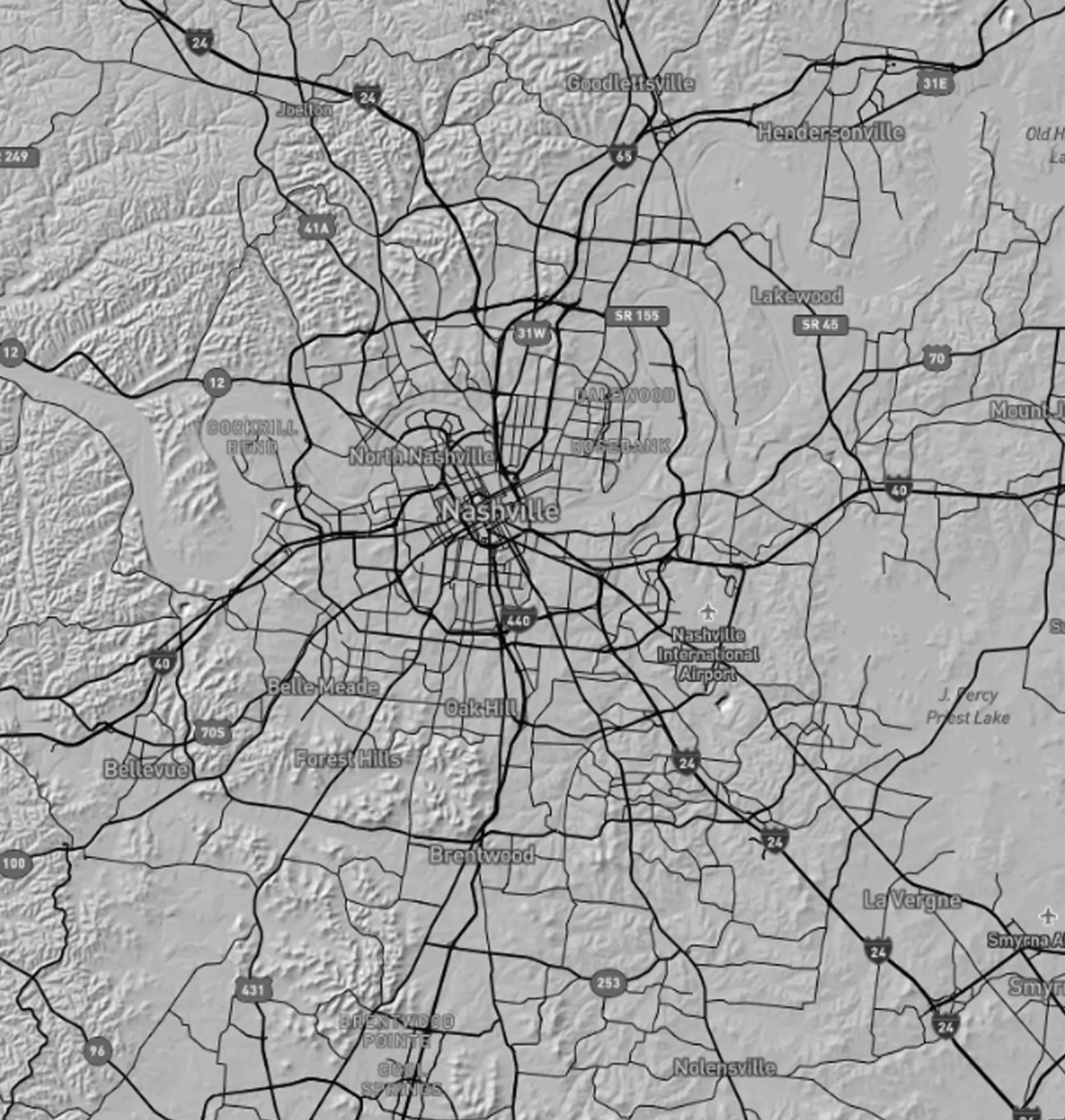
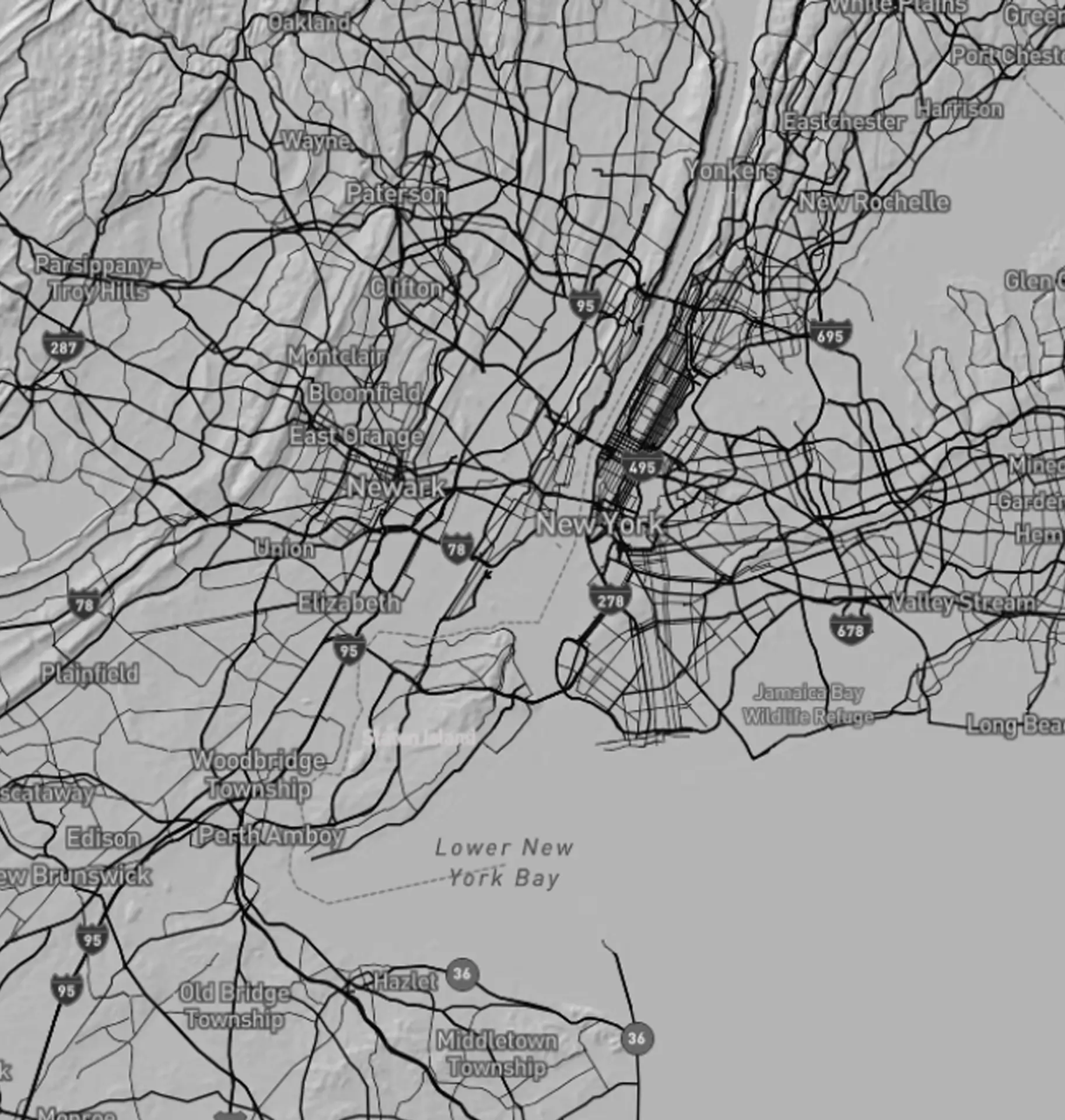
Features/Important Cities for the Production & News Sets market

Vanguard Production LED Series
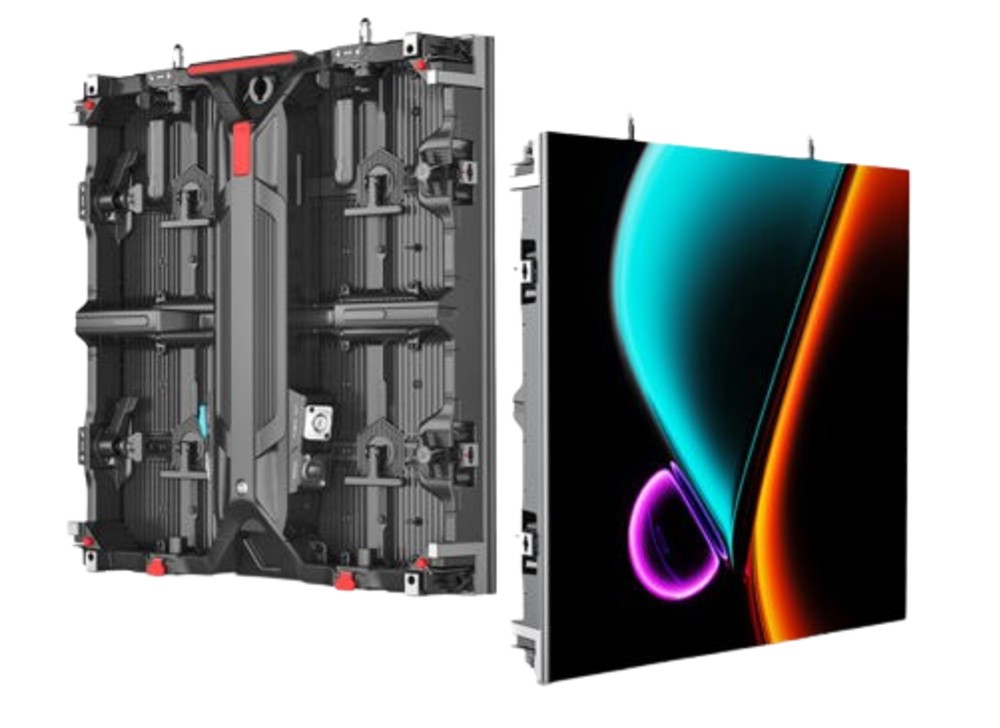
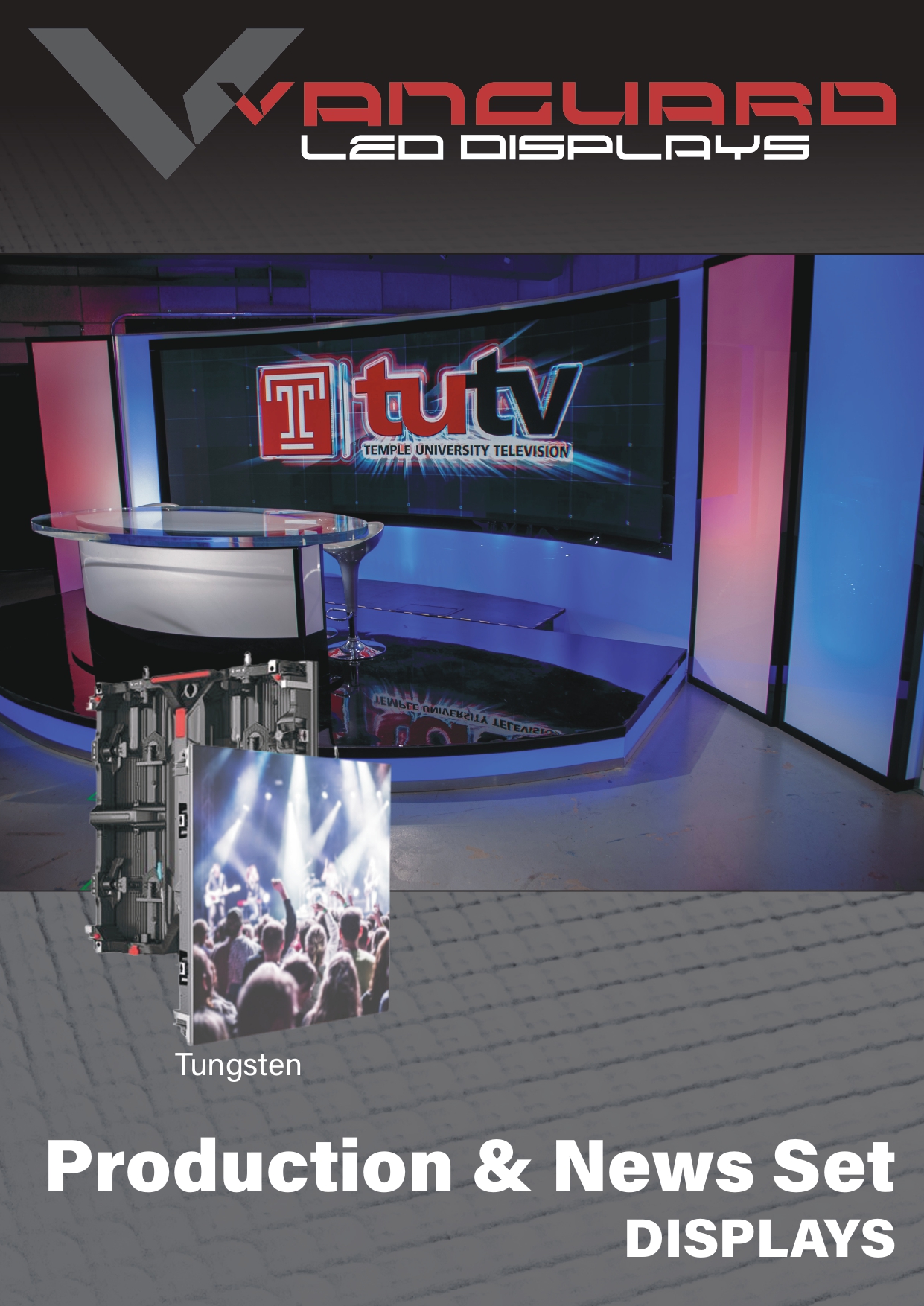
Tungsten
- Versatile Rental Solution
- Curving Flexibility
- High-quality rental applications
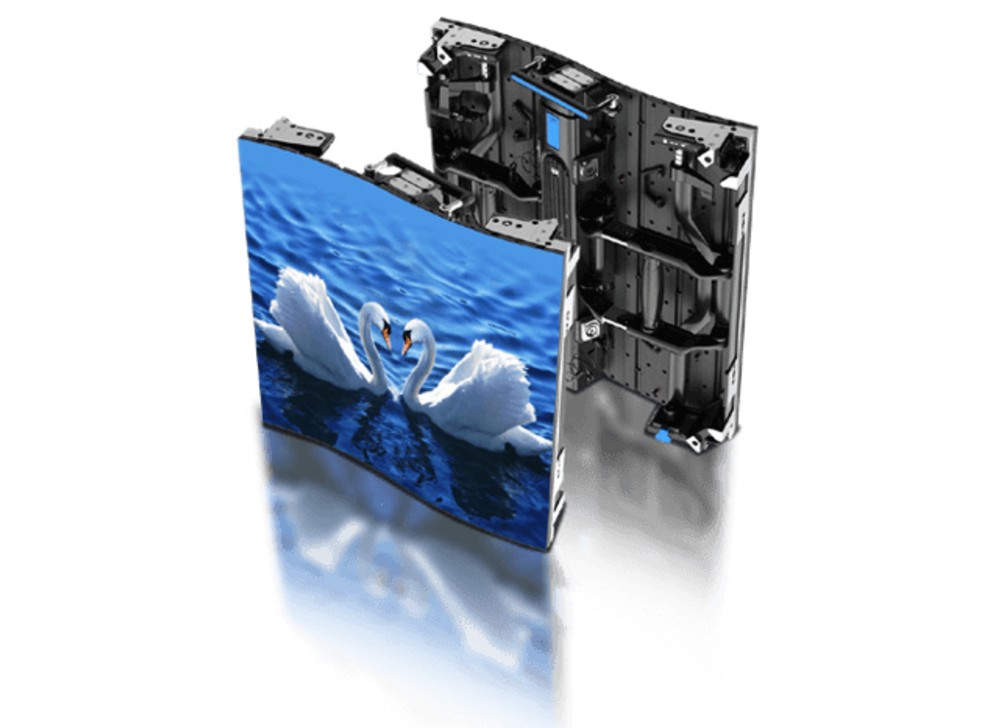
Cesium
- Dynamic Curving Capability
- Seamless 360° Display Design
- Durable Construction
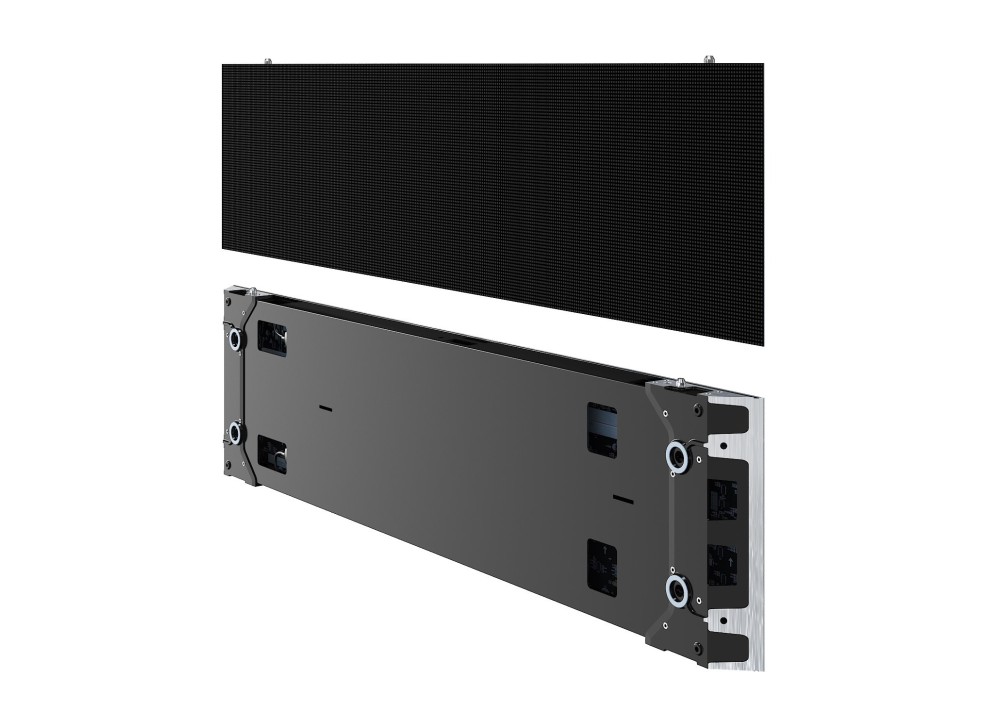
Zirconium
- Flexible Freeform Design
- Versatile Panel Options
- Creative Installation Capabilities
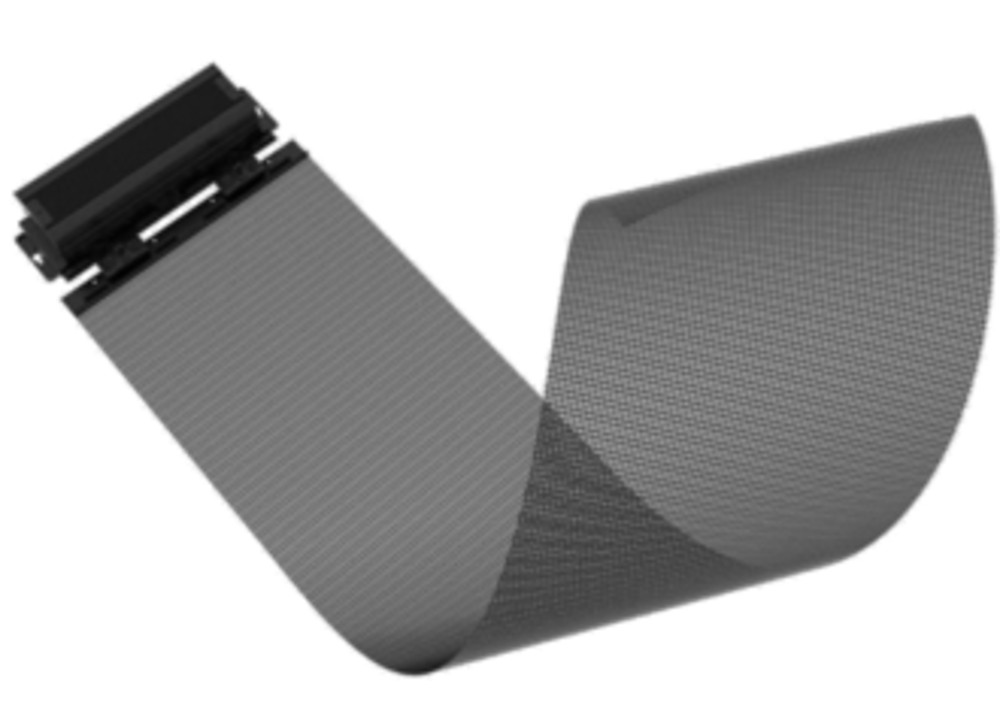
Houdini
- Next-Gen Transparent Display
- Flexible & Versatile Installation
- Brilliant Visibility
Frequently Asked Questions
What is required to use LED technology for production, on-camera, and for xR studios?
TL;DR: On-camera LED requires wide color gamut (DCI-P3), high refresh rates (3,840–7,680Hz), precise calibration, moiré reduction, and stable real-time processing.
What is the best LED display for broadcast news sets and production studios?
The best news-set displays combine fine pixel pitch appropriate to camera framing distances, refresh rates of 3,840Hz and above, DCI-P3 color calibrated to the studio's pipeline, and genlock synchronization with cameras. Seamless direct-view LED has replaced monitor walls on modern sets because it photographs as one continuous, bezel-free image.
What are the best commercial display choices for newsroom monitoring and production spaces?
Newsroom monitoring favors direct-view LED walls driven by controllers supporting large simultaneous window counts — dozens of feeds, dashboards, and returns on one seamless surface, rearranged by preset as coverage shifts. For 24/7 newsroom duty, prioritize continuous-operation rating, hot-swappable service, and redundant signal paths.
What are the best display panels for virtual production stages and xR sets?
TL;DR: Virtual production panels must fully satisfy the camera — high refresh with genlock, HDR bit depth, cinema-grade color gamut, and pitch fine enough that pixels never resolve on camera.
Which display panels help reduce moiré for on-camera studio use?
Moiré — the interference pattern between camera sensor and pixel grid — is reduced by finer pixel pitch relative to camera framing, lower scan ratios that drive more rows simultaneously, and matte or treated panel surfaces. Production technique completes the fix: camera distance, focal length, and slight defocus of the background all suppress the pattern.
How do refresh rate and scan rate affect camera-facing display panels?
Refresh rate determines how often the image redraws — below 3,840Hz, cameras can capture flicker and rolling scan lines invisible to the eye. Scan rate determines how many LED rows illuminate simultaneously; lower ratios like 1/8 hold more of the image lit at once, improving stability and reducing artifacts. Camera-facing panels need both specified well.
What are the best panel systems for entertainment production sets?
Entertainment production panels balance on-camera performance — high refresh, accurate calibrated color, moiré resistance — with production practicality: fast modular assembly into set pieces, curved and creative configurations, and durability through load-ins and strikes. Rental-grade construction is ideal for temporary builds; fixed-grade is ideal for permanent stages.
What should production teams know before buying LED display panels?
Production teams should verify on-camera specifications first — refresh rate, scan rate, color gamut, genlock — since panels that look perfect to the eye can fail on camera. Then weigh ease of assembly/disassembly for set changes, weight and rigging requirements, serviceability under production schedules, and spare parts depth, because shoot days don't wait for repairs.
Which panel systems are most reliable for broadcast studio backdrops and xR sets?
The most reliable backdrop systems pair proven diodes and advanced IC drivers with redundant power and signal options, hot-swappable modules serviceable between segments, and thermal design for all-day operation under studio lighting. In xR volumes, reliability extends to calibration stability — the wall must look identical take after take, day after day.
Which control systems are best for entertainment production sets?
Entertainment production sets need controllers built for the camera: refresh rate support of 3,840Hz and above, genlock input to sync with camera shutters, low-latency processing, and high bit depth with HDR support. Fast preset switching between scenes and reliable operation through long production days complete the requirements.
Which control systems are most reliable for live sports production?
Live sports demands controllers with full redundancy — power, processing, and signal paths — because there are no second takes. Low latency keeps live action immediate, genlock synchronizes with broadcast cameras, and high refresh rates eliminate scan artifacts on air. Proven 24/7-class hardware stability outweighs every other consideration.
Which video wall controllers are best for broadcast production environments?
Broadcast production requires frame-accurate controllers: genlock synchronization, refresh rate support above 3,840Hz, high bit depth with HDR and wide color gamut processing, and ultra-low latency. Redundant configurations protect live air, while precision color handling ensures the wall matches the production's calibrated pipeline.
What are the best display controllers for newsroom monitoring walls?
Newsroom monitoring walls exist to show many things at once — the best controllers support large simultaneous window counts with flexible layouts, low-latency feeds so monitored content stays current, and rock-solid 24/7 stability. Layout presets shift the wall instantly between normal operations and breaking-news modes.
Which control systems are best for virtual production and XR stages?
Virtual production demands the most from a controller: genlock locked to camera shutters, ultra-low latency in sync with real-time render engines, refresh rates of 3,840Hz and above, and high-bit-depth HDR color processing matching the cinema pipeline. Frame-accurate synchronization across every panel of the display is non-negotiable.
What are the best display controllers for broadcast studio backdrops?
Studio backdrops live on camera, so their controllers must deliver high refresh rates that eliminate scan lines, genlock synchronization with studio cameras, precise color processing to match broadcast calibration, and low latency for any live elements. Stable all-day operation and redundancy protect what the audience sees behind every shot.
REACH OUT TO US
Please fill out the form, and our team will get back to you as quickly as possible.
Demo Title
This will close in 50 seconds